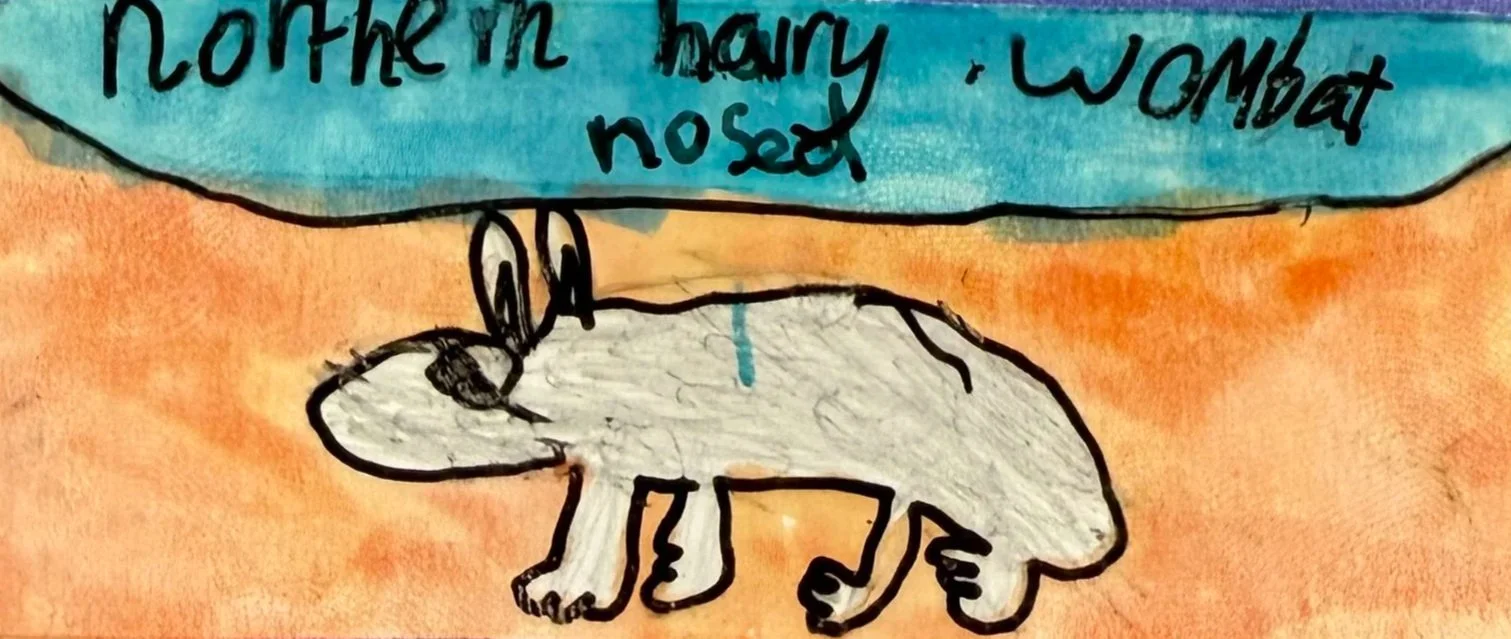
Drawn by Gilbert Wright aged 12 in 2020
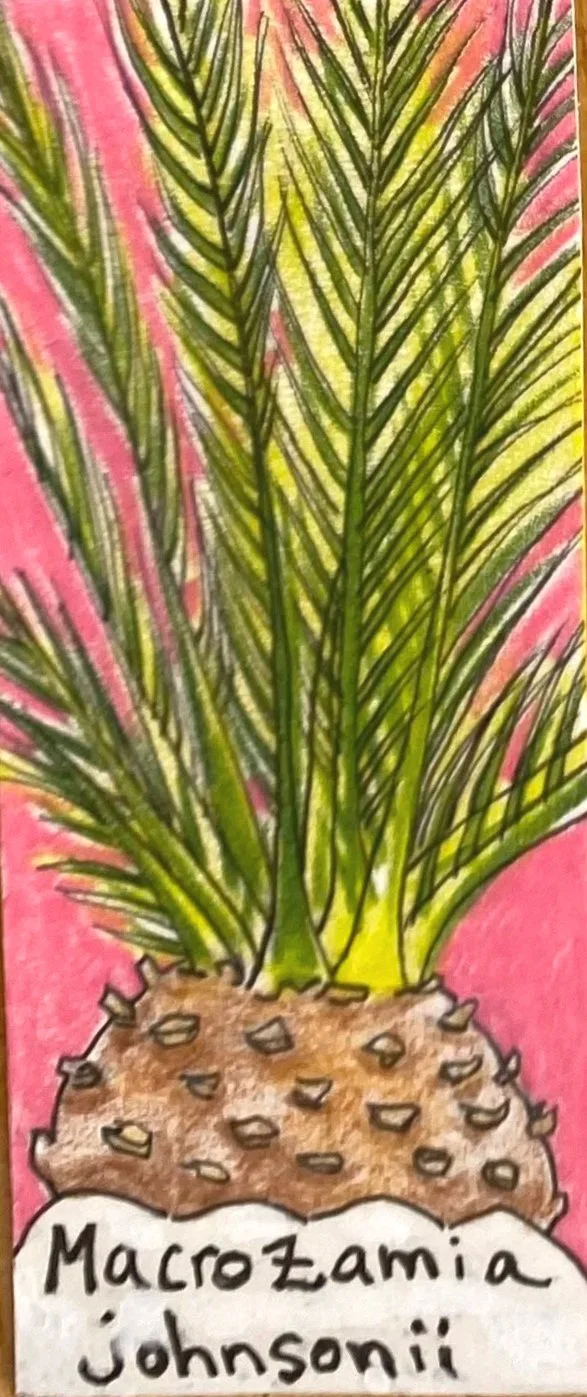
Drawn by professional illustrator Amber Johnson
DESIGN BRIEF
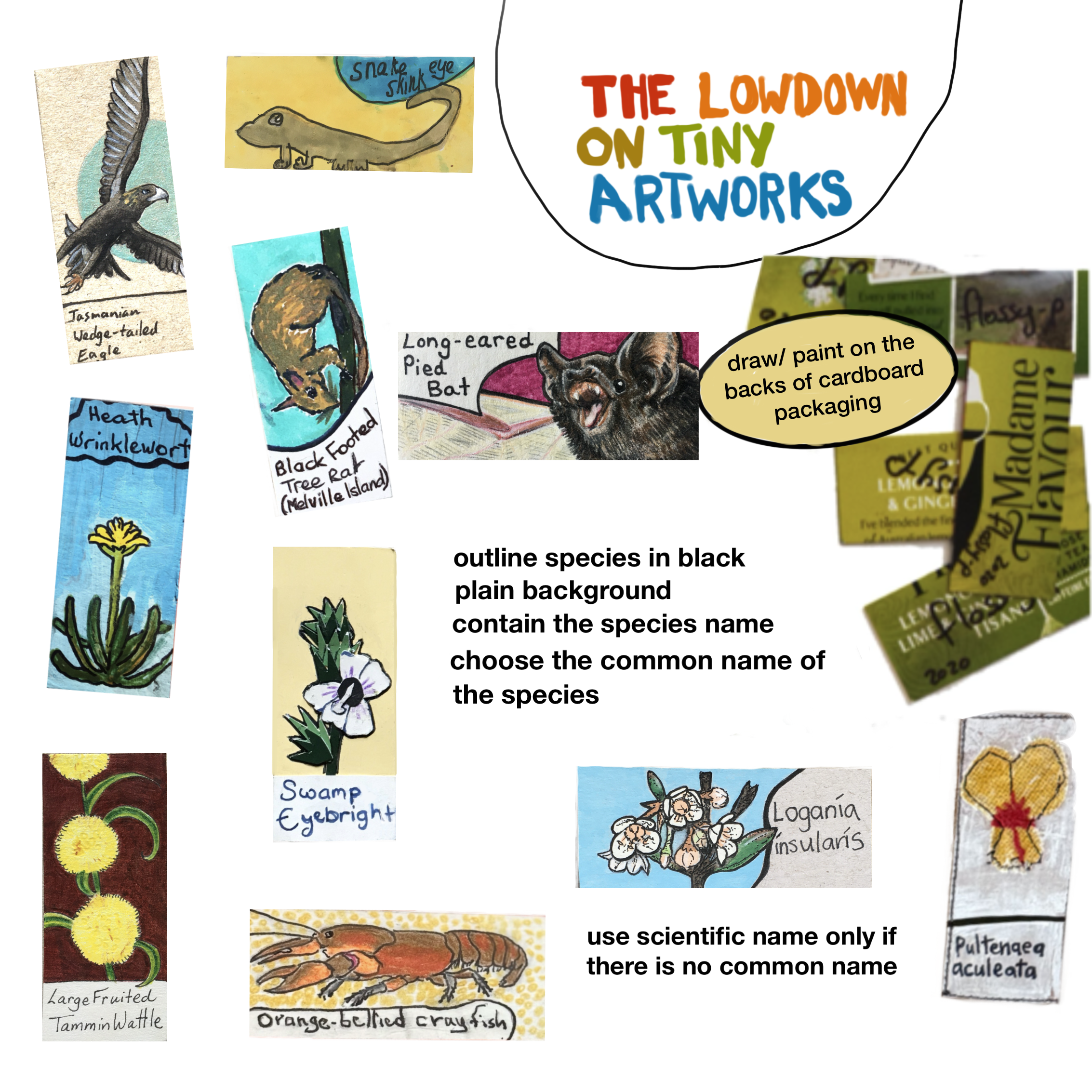
For your canvas choose cardboard from packaging you already have, like tea bag or biscuit boxes. Please don’t use fine art paper.
Canvas size must be 3cm x 7 cm in either Portrait or Landscape format
Use strong colours to help maintain a consistent look across the exhibition
Background should be a solid colour only
Where possible outline your species illustration in a thin black line
Write the common name of the species and make it legible
Contain the species name in a shape
Use any medium suitable for cardboard that won’t easily rub off or fade. Textas and acrylics are great but paper collage and stitched fabric have also been used so feel free to experiment.
HOW DO I GET A SPECIES TO DRAW When new species are added, subscribers to my newsletter will be sent a link to a spreadsheet containing these species and you can choose what you’d like to draw. I will also alert people via my IG page which is linked to FB and if interested you need to ask for the link.
WHERE DO I GET VISUAL REFERENCES FOR THE DRAWINGS The spreadsheet I send you has a hyperlink on the scientific name of the species. You click that and then simply scroll down the page to the Google Images link.
WHY SO SMALL The artworks for this project need to be tiny because we have so many threatened species, more than 2,000 and increasing yearly, and the original idea was to display them all in one room for maximum impact. Also, the incredibly small size is intended to draw the viewer closer.
WHY RECYCLED CARDBOARD The idea for this project has always been to make it as sustainable as possible. Cardboard packaging you have at home is accessible, free and versatile and can accommodate a wide range of media.
WHO CAN CONTRIBUTE AN ARTWORK Absolutely anybody of any age and any artistic ability is invited to contribute a ‘species’ artwork. So long as your work meets the design criteria it will be accepted. No judgement here, you do not have to be an Artist to get involved with this project.
WHERE DO I SEND THE FINISHED ARTWORK You will need to send your finished piece by mail, Express Post recommended for tracking purposes, to:
Carmel Killin
Day of the Species
206/ 87 - 97 Yarranabbe Road
Darling Point NSW 2027
If you live in or are visiting the Sydney area you can drop off your artwork on Saturdays only to:
506070 (a vintage design store)
33 Elizabeth Bay Road, Elizabeth Bay.
Email, text or call Carmel beforehand.
M: 0438 670306
IG: dayofthespecies
GOT MORE QUESTIONS Great, get in touch and I’ll do my best.
A FEW TIPS
If you are doing a species with a very long name, which is common for many botanical species, then consider the name and make that the first thing you put on your canvas. Illustrate your species around it.
You don’t have to illustrate the entire species. The Long-eared Pied Bat in the image above is a good example.
Experiment with different media. Can you identify the collage artwork and the stitched fabric artwork in the pic above?
TERMS & CONDITIONS
By contributing an artwork you give Carmel Killin permission to exhibit your artwork for the Day of the Species project and reproduce all or part of the artwork for any promotional purposes.
Your artwork, along with your name, may be used on websites, social media, print and other marketing materials for promoting the Day of the Species project and in any publication and/ or publicity generated by Carmel Killin now and anytime in the future.
Whenever there is an exhibition the name of the artist will feature in a credits list.
Artworks are not and never will be for sale.
Artists retain full copyright of their original work.
Currently, digital copies of the majority of the artworks are archived in the Wilderness Society’s Image Library.